Best Supercharger for Ford F150: 5.0L Kits Compared

Table of Contents
- Ford F-150 5.0 Supercharger Kit Comparison: What Fits Your Truck
- F-150 Supercharger Horsepower Gains: What to Expect at the Wheels
- Whipple Supercharger F-150: Why Twin-Screw Design Matters for Towing
- F-150 650 HP Safe Supercharger Setup: Supporting Mods and Tuning
- Total Installed Cost and Ownership: Kit Prices and Hidden Expenses
- Installation, Warranty, and Reliability: What to Know Before You Buy
- Which Supercharger Should You Pick for Your F-150?
- Frequently Asked Questions
Last Updated: October 18, 2026
Ford F-150 5.0 Supercharger Kit Comparison: What Fits Your Truck
The best supercharger for Ford F150 depends on one thing above all else: your truck's model year.
The short answer: for a 2021-2023 truck, the Whipple Gen 6 Stage 2 kit is the direct fit.

Below, we break down each kit, real horsepower and torque gains, towing behavior, installed cost, and the supporting mods that keep a 650 hp setup alive.
| Kit | Model Years | Price |
|---|---|---|
| Ford F150 5.0L Gen 6 Stage 2 SC Kit | 2021-2023 | $9,999.99 |
| Gen 6 Stage 2 Whipple Supercharger Kit | 2024-2026 | $10,299.99 |
| Gen 6 Stage 2 Kit With Power Onboard | 2024-2026 | $10,599.99 |
| Whipple Gen 6 3.8L Competition Kit | 2021-2026 | $10,999.99 |
2021-2023 F-150 5.0L Stage 2 Kit
The 2021-2023 F-150 5.0L Stage 2 kit from Whipple bolts to the factory engine with no cutting or grinding and is designed for 91 octane or higher.
What separates this kit is the cooling package: Whipple's patented dual-pass, dual-core intercooler routes charge air through each core twice, paired with an oversized heat exchanger and high-flow pump, so intake temps stay stable during repeated pulls instead of climbing after the first.
It carries CARB EO #D231-91, so it is 50-state legal for 2021-2023 trucks.
At $9,999.99, this is the most straightforward path to a daily-drivable 775 hp for the earlier generation.
2024-2026 F-150 5.0L Stage 2 Kit and Power Onboard Option
The 2024-2026 trucks run Ford's newer OTA-style ECU, and Whipple built the Gen 6 3.0L Stage 2 kit around it.
The calibration is the story: updated torque management, knock control, transmission tuning, and spark timing based on live manifold pressure, while retaining Tow, Eco, and Sport modes.
If your truck has the dual-alternator Power Onboard configuration, you need the dedicated version, priced at $10,599.99 (CARB EO #D-231-110). The standard 2024-2026 kit runs $10,299.99.
F-150 Supercharger Horsepower Gains: What to Expect at the Wheels
Advertised F-150 supercharger horsepower gains are flywheel numbers, not wheel numbers, and that distinction matters more on a truck than a car.
Expect roughly 12 to 18 percent driveline loss through the 10-speed automatic, transfer case, and rear axle, so a 775 hp flywheel kit often shows mid-600s to low-700s at the wheels depending on fuel, ambient temperature, and dyno type.
Advertised Output by Kit and Fuel
| Kit | Model Years | Advertised Flywheel Output | Fuel |
|---|---|---|---|
| Gen 6 Stage 2 (3.0L) | 2021-2023 | 775 hp / 675 lb-ft | 91 octane minimum |
| Gen 6 Stage 2 (3.0L) | 2024-2026 | Up to 805 hp / 685 lb-ft | 93 octane for the top figure |
| Gen 6 Stage 2 with Power Onboard | 2024-2026 | Up to 805 hp / 685 lb-ft | 93 octane for the top figure |
| Gen 6 3.8L Competition | 2021-2026 | Competition use only | Race fuel / not street legal |
The 2024-2026 "up to 805 hp" figure assumes 93 octane. On 91 octane the calibration pulls timing and boost to protect the engine, so plan on a lower number at the pump if 93 is not available in your area. That is not a defect; it is the knock-control strategy doing its job.

What the Curve Feels Like, Not Just the Peak
What you actually feel is the torque curve. A twin-screw positive displacement blower makes boost at throttle tip-in, so the pull starts low in the RPM range rather than building toward redline. For a truck, that low-end grunt beats a peak spec-sheet number, and two kits with the same peak horsepower can feel completely different below 3,000 rpm, where a loaded truck lives.
Gains by Use Case
- Daily driving: the mid-range torque is the gain you notice. Part-throttle response improves, and the truck holds speed on grades without downshifting as often.
- Towing: the low-end torque is the gain that matters. The same trailer feels lighter on the hitch, and the 10-speed holds a higher gear on climbs.
- Drag or competition: peak horsepower and airflow capacity dominate, which is why the 3.8L Competition kit exists. It is not a street calibration.
One honest caveat: advertised gains assume a healthy engine, correct fuel, and the included calibration. A high-mileage truck with weak ring sealing or a tired fuel pump will not hit the advertised figure, and no kit can fix that. Baseline the truck first.
Whipple Supercharger F-150: Why Twin-Screw Design Matters for Towing
A Whipple supercharger on an F-150 earns its keep in towing, not at the drag strip. Twin-screw, positive displacement blowers build boost immediately off idle, which is exactly where a loaded truck spends its time.
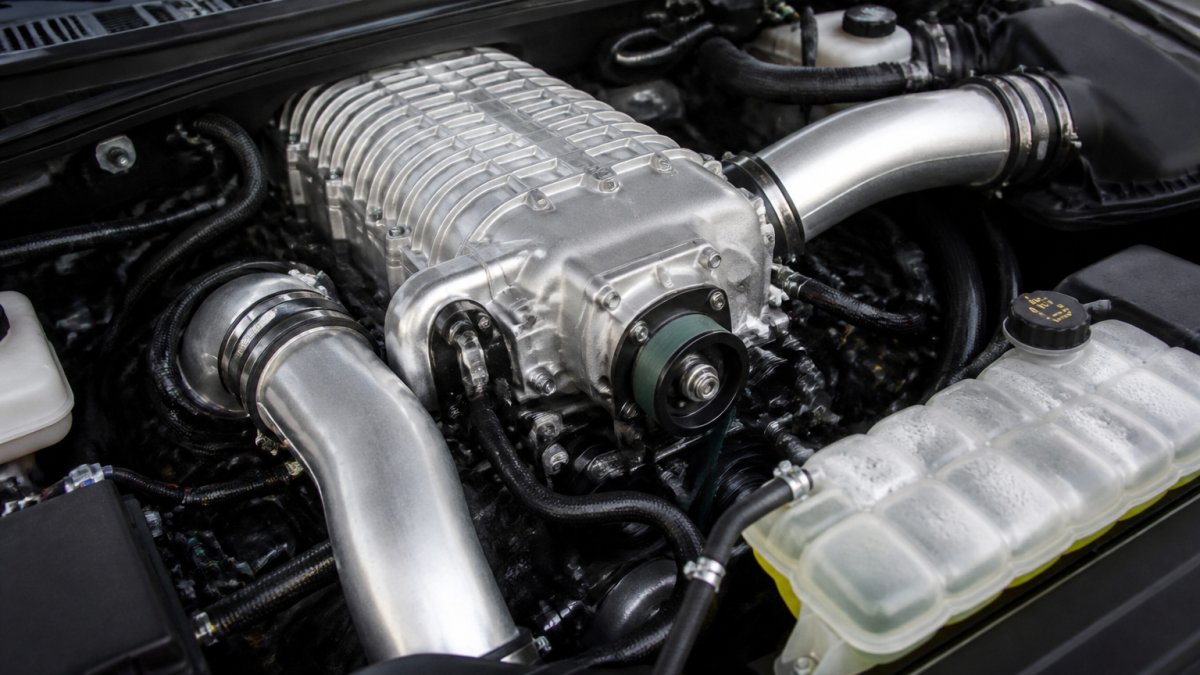
One honest caveat: more power does not raise your truck's payload or tow rating. The chassis, brakes, and cooling system still set the legal limit.
F-150 650 HP Safe Supercharger Setup: Supporting Mods and Tuning
An F-150 650 hp safe supercharger setup is less about the blower and more about everything around it. The kit supplies the hardware. The calibration and supporting parts decide whether the engine survives.
2021-2026 Ford F-150 5.0L Whipple Gen 6 3.8L Competition Supercharger Kit →
Here is what we check before we would call a 650 hp build safe:
- Fuel system capacity verified for the target power, with injectors sized to match
- 91 octane minimum at the pump, 93 preferred for the higher-output calibrations
- Spark plugs gapped and heat-ranged for boost
The Stage 2 kits include the flash tool and calibration, removing the biggest failure point: a generic tune written for a different truck. Whipple's calibration monitors torque output and pulls boost if a parameter falls out of spec, which is why we recommend staying with the included calibration rather than a custom file unless you have a specific reason to deviate.
Total Installed Cost and Ownership: Kit Prices and Hidden Expenses
Kit price is not total cost. Budget for the kit, professional installation, a dyno session, and consumables, then add ongoing premium fuel. Most buyers focus on the kit price and are surprised by the rest, so here is the full picture.
Kit Prices
| Kit | Model Years | Kit Price |
|---|---|---|
| Gen 6 Stage 2 (3.0L) | 2021-2023 | $9,999.99 |
| Gen 6 Stage 2 (3.0L) | 2024-2026 | $10,299.99 |
| Gen 6 Stage 2 with Power Onboard | 2024-2026 | $10,599.99 |
| Gen 6 3.8L Competition | 2021-2026 | $10,999.99 |
The Costs Beyond the Kit
- Professional installation: labor varies widely by shop and truck condition, a clean, low-mile truck and a high-mileage work truck are different jobs. Get it quoted in writing before you commit.
- Dyno verification: a baseline pull plus a post-install pull is the only way to know your actual gain. Budget for it as part of the build, not an optional extra.
- Consumables: spark plugs, intercooler coolant, and fresh oil, small line items that add up.
Fuel: The Permanent Cost
Every street-legal kit here requires 91 octane or higher, and the 2024-2026 top figure assumes 93, a permanent per-gallon increase for the life of the truck. Most owners find real-world economy drops under boost and in stop-and-go driving, while steady highway cruising at light throttle changes less. Do not buy a supercharger expecting to save on fuel; budget for premium and a modest economy penalty.

Maintenance: Tighter Intervals
Maintenance intervals tighten slightly under boost. Plan on more frequent plug checks, and keep an eye on the intercooler coolant level and the belt. These are inexpensive habits that prevent expensive failures.
A Realistic Ownership View
Add the kit price, quoted installation, a dyno session, consumables, and any supporting parts, then add ongoing premium-fuel and maintenance cost. That total, not the kit sticker, is what you are actually buying. Email to schedule your appointment and we will give you a real number instead of a guess.
Installation, Warranty, and Reliability: What to Know Before You Buy
Installation on these kits is a bolt-on job with no cutting or grinding, and the inverted supercharger design fits under the factory hood.
Warranty is the part buyers underestimate. Adding forced induction can affect factory powertrain coverage depending on your truck's age, mileage, and the dealer's read of the modification.
Reliability comes down to three things: correct calibration, adequate fuel, and thermal control.
Which Supercharger Should You Pick for Your F-150?
Match the kit to the truck and the use case, and the choice gets simple.
- 2021-2023 daily driver or tow rig: the Gen 6 Stage 2 kit at $9,999.99. 50-state legal, 775 hp, full drive-mode retention.
- 2024-2026 daily driver: the Gen 6 Stage 2 kit at $10,299.99, or the Power Onboard version at $10,599.99 if you have the dual-alternator setup.
- Race or off-road competition build: the Gen 6 3.8L Competition kit at $10,999.99. More airflow capacity, no calibration included, not street legal.
- Raptor R owner: the 3.8L upgrade is a separate animal, rated up to 975 hp on 93 octane and CARB compliant under EO D-231-133.
If you want a turnkey result rather than a box of parts, that is where we come in. You can review our Whipple Superchargers twin-screw technology background for the engineering detail behind these systems.
For emissions questions, the California Air Resources Board aftermarket parts database lets you confirm an executive order number against your model year before you buy.
Building a supercharged F-150 that makes big power and stays reliable is a fitment and calibration problem, not a parts problem.
Frequently Asked Questions
Which supercharger kit is best for a 5.0 F-150?
The best kit depends on your truck's model year and goals. For 2021-2023 trucks, the Whipple Gen 6 Stage 2 kit delivers 775 hp and 675 lb-ft. For 2024-2026 models, the updated Gen 6 Stage 2 kit makes up to 805 hp and 685 lb-ft. Both are 50-state legal, bolt on without cutting, and retain factory driving modes. If you need dual alternators for power onboard, the 2024-2026 Power Onboard version is the direct fit.
How much horsepower does a supercharger add to a 5.0 F-150?
A Stage 2 Whipple kit on the 5.0L Coyote typically adds around 275 to 300 horsepower over stock at the flywheel, depending on model year and fuel. The 2021-2023 kit is rated at 775 hp, while the 2024-2026 kit reaches 805 hp on 93 octane. These are flywheel figures; wheel horsepower will be lower due to drivetrain loss. Real gains depend on elevation, fuel quality, and dyno calibration.
Can you safely make 650 horsepower with a supercharged F-150?
Yes, 650 hp is a safe target for a stock 5.0L with a proper kit and calibration. The key is using a complete system with a dedicated tune, upgraded fuel injectors, and adequate cooling. Whipple's Stage 2 kits include the Tomahawk flash tool and GT500 Bosch injectors to support that power level reliably. Avoid pushing beyond the kit's calibration without supporting mods like a fuel pump upgrade or colder spark plugs.
Does supercharging an F-150 affect towing or reliability?
A twin-screw supercharger like the Whipple Gen 6 maintains a flat torque curve, which actually improves towing by delivering strong low-end power. The kits retain factory Tow, Eco, and Sport modes. Reliability depends on the tune and cooling: Whipple's dual-pass intercooler and oversized heat exchanger keep intake temps stable under load. Stick to the included calibration and 91+ octane fuel for daily driving and towing.
What supporting modifications does a supercharged F-150 need?
Most Stage 2 Whipple kits are complete bolt-on packages that include injectors, throttle body, intercooler, and calibration. For a safe 650 hp setup, no extra mods are required beyond the kit. If you target higher power or track use, consider a fuel pump upgrade, colder spark plugs, and a custom dyno calibration. The competition 3.8L kit is race-only and requires a standalone fuel system and tuning.

Leave a comment