How to Find a Ford Racing Parts Dealer in Cincinnati

Last Updated: October 25, 2026
Quick Summary
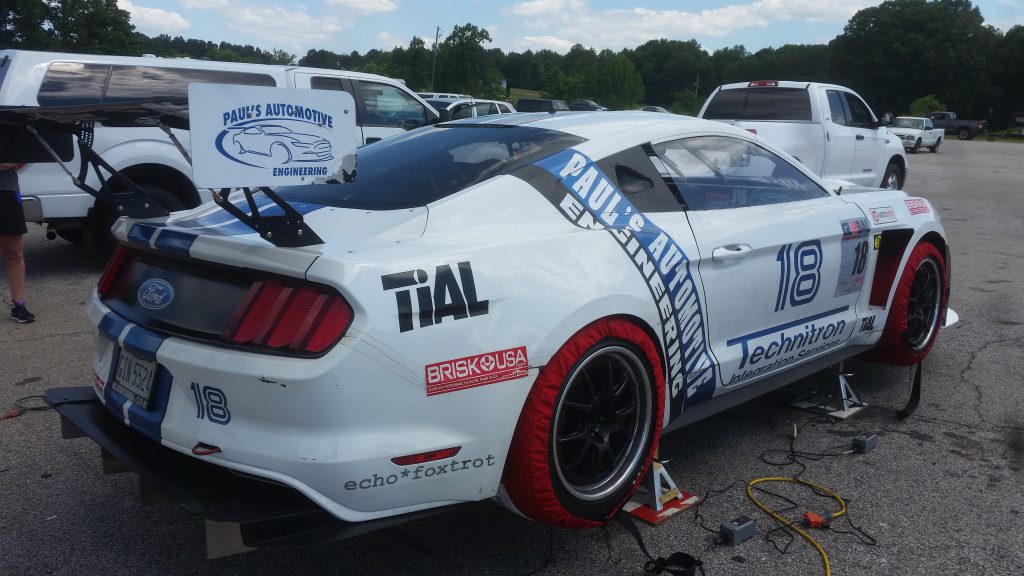
To find a Ford racing parts dealer in Cincinnati, verify the seller is a licensed Ford Racing distributor, confirm the exact Ford Performance part number and fitment before paying, and ask who will handle the install. Paul's Automotive Engineering in Blue Ash is a licensed Ford Racing distributor that handles parts and installation under one roof.
- Ask whether the seller is a licensed distributor for the brand before ordering any part.
- Confirm the exact part number including suffix, engine code, and transmission compatibility.
- The 2024 Coyote manual control pack M-6017-M50D is priced at $2,734.99.
- Installing a control pack PCM in a production vehicle results in a no-start condition.
- Request a written quote with part number, price, lead time, and shipping method.
Table of Contents
- Finding a Trusted Ford Racing Parts Dealer in Cincinnati
- Dealership Parts Counter vs. Authorized Performance Shop
- How to Verify a Genuine Ford Performance Parts Dealer
- Inside the Ford Performance Parts Catalog
- Choosing the Right Coyote Crate Engine for Your Build
- Ford Performance Parts Installation: What to Expect
- Ordering, Pickup, and Shipping for Cincinnati Buyers
- Schedule Your Build with a Cincinnati Ford Racing Parts Dealer
- Frequently Asked Questions
Finding a Trusted Ford Racing Parts Dealer in Cincinnati
The hardest part of a performance build isn't choosing a supercharger. It's finding a Ford racing parts dealer in Cincinnati who can verify fitment, order the right part number, and stand behind the install.
A Ford racing parts dealer is a business authorized to sell genuine Ford Performance components, and the difference between authorized and "authorized-looking" shows up fast. According to AAPEX's 2026 State of the Automotive Aftermarket Survey, 61% of respondents expect demand for aftermarket parts and services to grow in 2026.
Below, we'll show you how to separate a real dealer from a reseller, verify a part number before you pay, and what to expect from installation, shipping, and scheduling.
Dealership Parts Counter vs. Authorized Performance Shop
A dealership parts counter is built for factory replacement parts; an authorized performance shop is built for upgrades, engine swaps, and calibration work. The gap matters most when your build goes beyond bolt-ons.
Dealerships can order Ford Performance parts, and some do it well. But their staff is usually trained around stock vehicle service, not matching a crate engine to a control pack, fuel system, and transmission.
A performance shop that carries Ford Racing as a licensed line answers those questions in the same conversation.
Watch out: the most common mistake is ordering a control pack or crate engine from a vendor who never asks what transmission you're running. That single omission causes more no-start conditions than any other.
How to Verify a Genuine Ford Performance Parts Dealer
Verification takes about five minutes and saves you a return shipment. Ask three questions before ordering.
First, ask whether they're a licensed distributor for the brand you're buying. A real dealer answers without hesitation. Second, ask for the Ford Performance part number before you pay, not after. Third, ask what happens if the part arrives damaged or doesn't fit. A vague answer here is your signal to walk.
Checking Part Numbers and Fitment Before You Order
Ford Performance part numbers follow a pattern, and the suffix tells you more than the listing title does. The 2024 Coyote control pack for a manual transmission is M-6017-M50D; the automatic version is M-6017-M50DAUTO. Order the wrong one and you're holding a harness that won't talk to your gearbox.
Fitment is the second check. Ford Performance publishes application notes, and they matter. The 2024 Coyote manual control pack is designed to run the Gen 4 dual throttle body engine M-6007-M50D with a manual transmission, and Ford's notes state it is not for use with any F150 engine. That's the difference between a build that starts and one that doesn't.
A quick verification checklist:
- Confirm the exact part number, including any suffix
- Confirm the engine code the part is designed for
- Confirm transmission compatibility
- Confirm fuel system requirements, especially return-type needs
- Confirm the seller is a licensed distributor
If a seller can't answer all five, keep looking.
Inside the Ford Performance Parts Catalog
The catalog is organized around vehicle model and model year, which is why fitment checks matter so much. To see the full range, browse the Ford Performance parts catalog and check part numbers against your build.
What most buyers miss is that the catalog is only half the story. The other half is knowing which parts work together as a system. A supercharger without the right calibration is an expensive paperweight.
Here's a practical way to read the catalog before you call anyone:
- Start with the vehicle and the goal. Note the year, model, engine code, transmission, and whether the car is street-driven, track-driven, or a restomod, those five details narrow the catalog faster than any search filter.
- Work from the part number backward. Find the part you think you want, then read the application notes on engine codes, transmission compatibility, fuel system requirements, and emissions restrictions. If the notes say "not for use with" a certain engine or chassis, believe them.
- Check the supporting parts. A control pack has a matching engine, a supercharger kit has a matching calibration and fuel system, and a crate engine has a matching transmission and accessory drive. The catalog lists each part separately; the application notes tell you which belong together.
- Ask about supersessions and revisions. Part numbers change when Ford updates a component, and a dealer who works with Ford Performance regularly can tell you whether the number you found is current.
First-time buyers often order the headline part, the supercharger, crate engine, or control pack, then discover the supporting parts are on backorder or require a different part number.
The catalog also separates street-legal and off-road-only parts, which matters for emissions and warranty conversations, confirm before you order, not after the part arrives.
Choosing the Right Coyote Crate Engine for Your Build
Coyote swaps succeed or fail on one decision: matching the engine to the control pack and transmission before anything gets ordered. The engine is the easy part. The electronics are where builds stall.
Here's how the common paths break down:
| Build Type | Engine / Part | Control Pack | Transmission |
|---|---|---|---|
| 2024 Mustang GT swap, manual | Gen 4 Coyote M-6007-M50D | M-6017-M50D | Manual |
| 2024 Mustang GT swap, auto | Gen 4 Coyote M-6007-M50DAUTO | M-6017-M50DAUTO | 10R80 10-speed |
| Gen 4X Coyote swap, manual | M-6007-M50H | M-6017-M50HM | Manual |
| Classic restomod | 363 cubic inch Boss crate | Varies by induction | Buyer's choice |
For a manual-trans 2024 build, the 2024 Coyote 5.0L control pack for manual transmissions includes the PCM with Ford Performance calibration, electronic throttle pedal, control pack harness, OBD-II port, power distribution module, air boxes, MAF sensors, radiator hoses, and HEGO sensors.
2024 COYOTE 5.0L CONTROL PACK MANUAL TRANS →

If you're running the 10R80, the automatic version carries the same $2,734.99 price and the same contents, matched to the M-6007-M50DAUTO engine.
For Gen 4X builds, the Gen 4X Coyote control pack with manual transmission runs the M-6007-M50H crate engine and comes in at $2,249.99.
Classic Mustang owners often go a different route entirely.
One note that trips people up: installing a control pack PCM in a production vehicle results in a no-start condition. These packs are built for custom builds, not for plugging into a factory harness.
Ford Performance Parts Installation: What to Expect
Installation is where a parts order becomes a project, and the sequence matters more than the parts list.
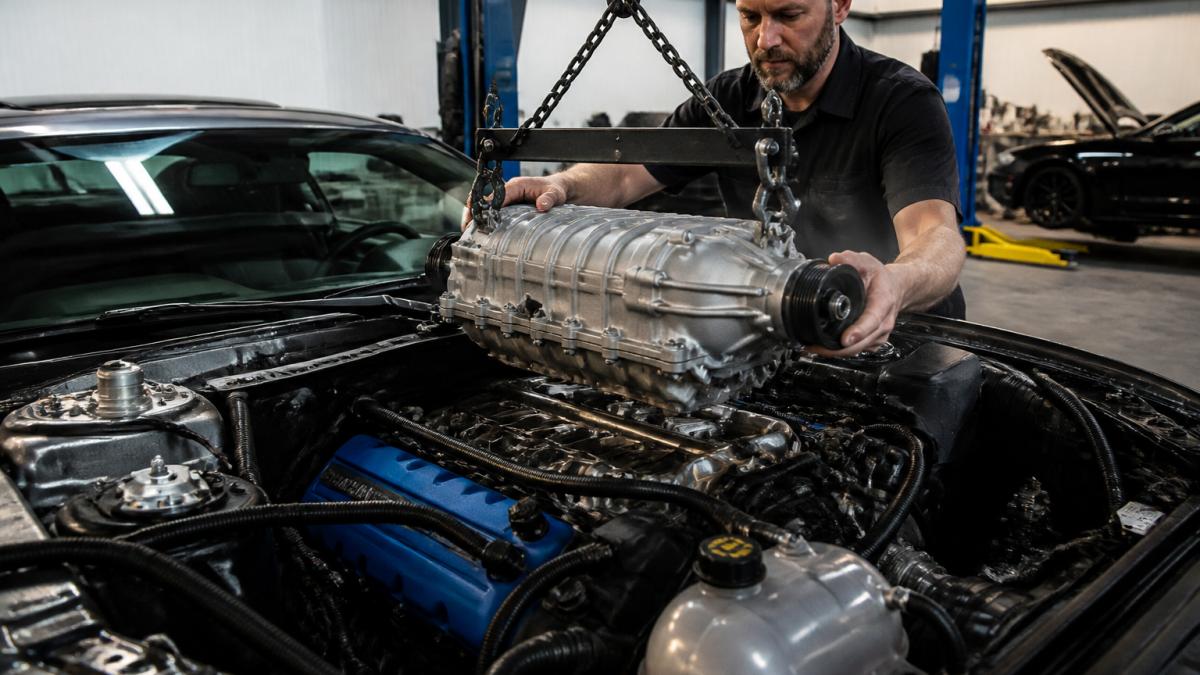
The calibration step is the one buyers underestimate. A kit installed perfectly but tuned poorly runs badly.
Warranty and modification implications deserve a straight answer too. Installing performance parts can affect factory warranty coverage on related components, and the specifics depend on your vehicle, the part, and your dealer. Ask before you buy, not after something breaks.
Ordering, Pickup, and Shipping for Cincinnati Buyers
Start with a quote request rather than a checkout button. A good parts counter will ask for the vehicle year, model, engine code, transmission, and the part number you're considering.
Lead times vary by part family, and it helps to know the pattern before you commit to a deadline:
- Stock-order parts, filters, gaskets, hardware, common accessories, are often available quickly, but availability still depends on the dealer's stock and the distribution center.
- Performance kits and control packs, supercharger kits, crate engine control packs, calibration kits, are frequently special-order items. Lead times can range from days to several weeks depending on the part number and season.
- Crate engines and large assemblies, these ship on pallets and may require lift gate service for residential delivery. Confirm the delivery method before the order ships, not after.
- Backordered or superseded parts, ask whether the number you found is current and whether a supersession changes the lead time.
For local buyers, pickup is often faster and lets you confirm the part number in person before it goes on the car.
A practical comparison of the two paths:
| Consideration | Local pickup | Shipping |
|---|---|---|
| Speed | Fastest if the part is in stock | Depends on carrier and lead time |
| Inspection | Confirm part number and condition in person | Inspect on delivery and note damage before signing |
| Large items | You arrange transport | Confirm lift gate and residential delivery |
| Returns | Easier to handle in person | Follow the dealer's return process |
| Best for | Builds on a tight timeline | Buyers outside the area or ordering special items |
If you're outside Ohio, ask how a problem gets handled before you order. Read the Ford Performance parts shipping guide for details on how orders are packed and sent.
One more time-saver: ask for the quote in writing, including the part number, price, estimated lead time, and shipping method. That record is what you refer to if the part arrives late or wrong.
Schedule Your Build with a Cincinnati Ford Racing Parts Dealer
The last step decides how the whole project goes: booking the install with a shop that does this work every week. Parts availability is a supply question; getting the car right is a skill question.
Before you book, know what to expect from the shop side. You can read what to expect from Mustang performance shop communication so there are no surprises about updates, timelines, or how decisions get made during the build.
A few practical notes for scheduling. Ask about current lead times before you commit to a summer deadline, since performance parts can take time to arrive.
Finding the right Ford racing parts dealer in Cincinnati comes down to verification, not price: confirm the part number, the fitment, that the seller is licensed, and who's doing the install.
If you'd rather skip the guesswork, Paul's Automotive Engineering can handle the parts and the install under one roof.
Frequently Asked Questions
Where can I buy Ford Racing parts in Cincinnati?
You have two main routes: a Ford dealership parts counter or an authorized performance shop that carries Ford Performance parts. Dealership counters can order most Ford Performance part numbers but rarely stock them, so expect a wait. A licensed distributor such as Paul's Automotive Engineering in Blue Ash stocks and orders Ford Racing parts and can also install them, which matters when a part needs calibration or a specific install procedure. Call ahead to confirm stock and fitment for your model year before you drive out.
How do I check whether a Ford Racing part fits my Mustang?
Start with the part number and the model year, engine, and transmission listed in the Ford Performance parts catalog. Ford Performance part numbers follow a pattern, and the catalog entry states exactly which vehicles a part was validated for. A 2024 Coyote control pack, for example, is built for the Gen 4 dual throttle body engine and won't run an F150 Coyote. Ask the dealer to confirm fitment against your VIN, and get the answer in writing before you pay.
What is the difference between Ford Performance parts and aftermarket parts?
Ford Performance parts are engineered and validated by Ford for specific Ford vehicles, so fitment, calibration, and warranty support follow Ford's own testing. Aftermarket parts can offer more aggressive power gains or lower prices, but the burden of proving compatibility falls on you and your installer. For a daily-driven Mustang or F150, a Ford Performance part with a matching calibration removes much of the guesswork. For a dedicated race build, aftermarket may make sense, but plan the tuning with your shop.
Can a performance shop install Ford Racing parts?
Yes, and for anything involving calibration, it is often the better choice. Ford performance parts installation on a supercharger, crate engine, or control pack requires more than bolting parts on: the PCM calibration has to match the combination, and a control pack PCM installed in a production vehicle will cause a no-start condition. An experienced shop handles the wiring, fuel system requirements, and dyno verification so the car runs correctly instead of just starting.


Leave a comment