Is Installing an F150 Supercharger Kit a DIY Job?

Last Updated: October 26, 2026
Quick Summary
Installing an F150 supercharger kit is within reach for a confident home mechanic but is not a first-timer project, since it touches the top of the engine, fuel system, cooling stack, and computer. Published shop estimates land in the 6-9 hour range, while a careful first-timer should plan a full weekend or more.
- The 5.0L Coyote V8 is the engine that gets the most kit support.
- Confirm 2WD or 4WD before ordering, since drivetrain layout can change how the kit sits.
- Pull stored and pending codes with a scan tool before you touch anything.
- Torque in the sequence the instructions give, typically from the center outward in stages.
- The Stage 2 kits include the Whipple Tomahawk flash tool for PCM programming.
Table of Contents
- What a Custom F150 Supercharger Kit Install Actually Involves
- F-150 Supercharger Kit Fitment by Year and Engine
- Tools, Workspace, and Skill Level You Need Before You Start
- F-150 Supercharger Installation Time: What the Job Really Takes
- Step-by-Step Install: From Pre-Installation Inspection to First Start
- F-150 Supercharger Supporting Mods: Fuel, Cooling, and Drivetrain
- F-150 Supercharger Tuning: Why the Calibration Decides the Build
- Book Your Supercharger Install With a Shop That Tunes What It Builds
- Frequently Asked Questions
What a Custom F150 Supercharger Kit Install Actually Involves
A custom F150 supercharger kit installation adds a twin-screw or centrifugal blower, a larger throttle body, an intercooler system, and a calibration tool to your truck's 5.0L V8.
The kit itself is only half the job. Ford now offers a V8 supercharger kit as a pre-installed, pre-delivery option on 2026 F-150 trucks with the 5.0-liter engine, according to Ford's 2026 supercharger announcement.
Here is what a complete kit typically includes:
- The supercharger assembly itself, often a 2.65-liter or 3.0-liter twin-screw unit
- A high-flow throttle body, such as a 132mm billet unit
- Dual-pass intercoolers and an oversized heat exchanger
The install touches the top of the engine, the fuel system, the cooling stack, and the computer, which is why planning matters more than speed. If you want to see the kits before you commit, browse the F150 superchargers we stock.
F-150 Supercharger Kit Fitment by Year and Engine
Fitment is the first thing to nail down, and where most DIY shoppers go wrong. A supercharger kit is built for a specific engine, model-year range, and drivetrain. Buy the wrong one and you are stuck with a very expensive paperweight.
The 5.0L Coyote V8 is the engine that gets the most kit support. Ford Performance lists 700 hp and 590 lb-ft for its 5.0L kit, and Roush lists 705 hp for its 2021-2026 version, according to Ford Performance and Roush kit specs.
Here is a rough fitment map to work from:
| Model Year | Engine | Common Kit Notes |
|---|---|---|
| 2021-2023 | 5.0L V8 | Gen 6 Stage 2 kits, 50-state legal options |
| 2024-2026 | 5.0L V8 | Updated Gen 6 kits for the new ECU and 10-speed |
| Older 5.0L trucks | 5.0L V8 | Verify kit year range before ordering |
If you drive a 2021-2023 truck, the Ford F150 5.0L Gen 6 Stage 2 SC Kit 2021-2023 is the direct fit. For a 2024-2026 truck, the 2024-2026 Ford F-150 5.0L Gen 6 Stage 2 Whipple Supercharger Kit is built for that platform. Read our comparison of 5.0L F150 supercharger kits.


One more check: confirm 2WD or 4WD. Drivetrain layout can change how the kit sits and how the tune delivers power.
Tools, Workspace, and Skill Level You Need Before You Start
Honest answer: this job is within reach for a confident home mechanic, but it is not a first-timer project. Run this checklist against your garage and comfort level before ordering; if you cannot check most boxes, budget for a professional install.
Tools you will actually reach for
- Torque wrench in the ranges the kit specifies (typically a 3/8-inch drive for the top-end fasteners and a 1/2-inch drive for the heavier hardware), calibrated and in good condition
- Full metric and standard socket and wrench set, including deep sockets and extensions for the intake and supercharger bolts
- Scan tool that reads and clears codes and, ideally, logs live data such as fuel trims and intake air temperature
Workspace requirements
- Covered, clean, and well lit. You will be working over an open engine valley where debris does real damage.
- Enough room to open both doors and walk around the front, roughly a two-car bay or a generous single bay with the nose pulled forward.
- A level surface for jack stands, and a place to lay out removed parts in order.
Skill checkpoints, be honest with yourself
- Can you remove and reinstall intake and fuel components without damaging seals? A pinched injector O-ring is a fuel leak.
- Can you route and bleed a coolant loop? Trapped air in the intercooler circuit causes high intake temps and timing pull.
- Can you flash a PCM and confirm the calibration took hold? A dropped flash can brick the computer.
Time and cost reality check
Published shop estimates commonly land in the 6-9 hour range, and a careful first-timer should plan a full weekend or more. Professional labor is typically quoted separately, so get a written estimate that includes calibration and a post-install scan. If your time is worth more than the labor savings, hand the job off. Rushing through the process often leads to common installation mistakes that can compromise the engine's long-term reliability and performance.
F-150 Supercharger Installation Time: What the Job Really Takes
Published time estimates vary by system. ProCharger lists 8-9 hours for its 2024-2026 F-150 system, and a separate ProCharger article says its F-150 install typically takes 6-8 hours, according to ProCharger F-150 supercharger product page.
Realistic time for a first-time DIY install:
- Prep and inspection: 1-2 hours
- Teardown: 2-3 hours
- Supercharger and cooling install: 4-6 hours
That puts a careful first-timer at a full weekend or more. A shop with a lift and prior experience moves faster because the steps are already in muscle memory.
Ford F150 5.0L Gen 6 Stage 2 SC Kit 2021-2023 →
Step-by-Step Install: From Pre-Installation Inspection to First Start
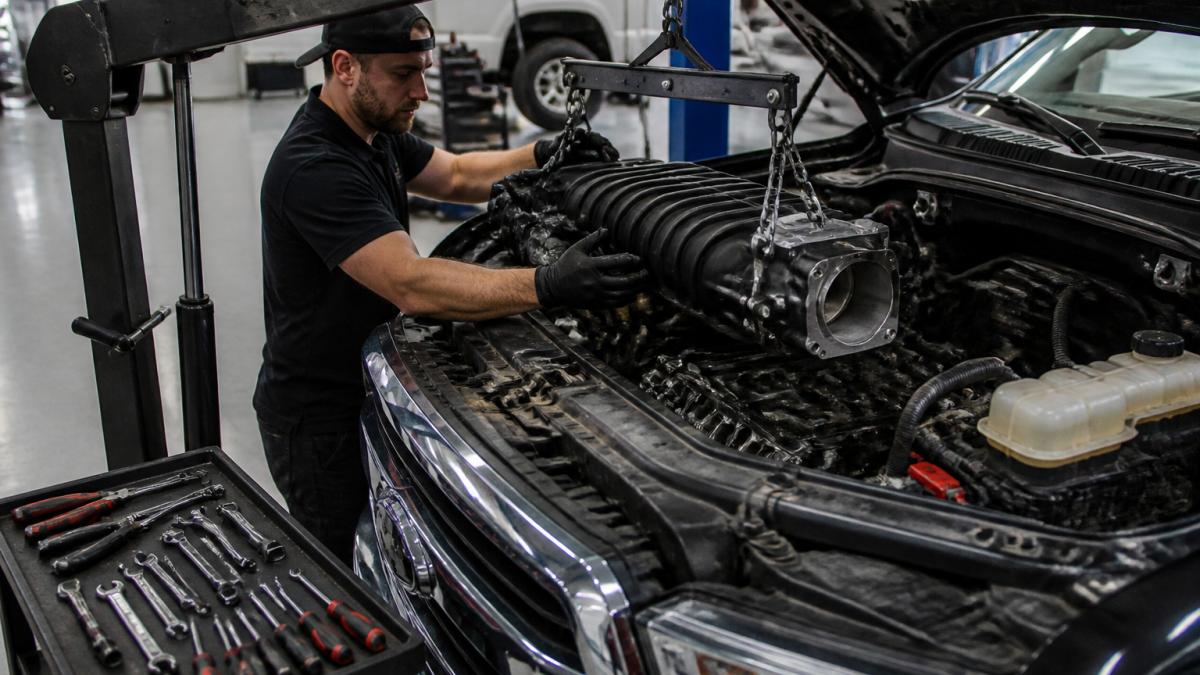
This is the reader-friendly sequence with checkpoints, so you know what to verify before moving on. Work through the phases in order, skipping the inspection is how good kits turn into bad builds.
Phase 1, Pre-installation inspection (1-2 hours)
- Pull stored and pending codes with a scan tool before you touch anything. Write them down. A P0300 misfire or a P0171 lean code that already exists will get worse under boost, and you need a clean baseline to compare against after the install.
- Check compression on all eight cylinders. Most practitioners look for cylinders within roughly 10 percent of each other; a low hole means stop and diagnose before adding boost.
- Inspect the belt drive, cooling stack, and fuel system for wear. A tired water pump or clogged heat exchanger will undermine the intercooler loop you are adding.
- Confirm the kit box contents against the packing list. Missing hardware discovered mid-install is the most common cause of a stalled weekend.
Phase 2, Teardown (2-3 hours)
- Disconnect the negative battery terminal and depressurize the fuel system per the kit instructions. On a returnless system, that usually means pulling the fuel pump fuse and cranking briefly.
- Remove the intake tract, throttle body, and top-end components in the order specified. Bag and label fasteners by location, intake and supercharger bolts are not interchangeable.
- Drain and capture coolant if the kit requires opening the cooling system, and plug open ports so debris stays out of the engine valley.
Phase 3, Fuel and supercharger install (4-6 hours)
- Install the fuel system upgrades first, larger injectors, and any pump or boost-a-pump hardware the kit includes. Seat injector O-rings cleanly; a pinched O-ring is a fuel leak waiting for first start.
- Mount the supercharger assembly into the valley with a second person guiding it down. Lower it evenly, do not let it hang on the dowels, and hand-thread the fasteners before torquing.
- Torque in the sequence the instructions give, typically working from the center outward in stages. Use a calibrated torque wrench, this is the single most common DIY failure point.
- Reinstall the throttle body, intake, and belts, and confirm belt routing against the diagram. A misrouted belt will shred on first start.
Phase 4, Intercooler loop (1-2 hours)
- Route the intercooler coolant hoses away from exhaust heat and sharp edges, then fill the system.
- Bleed the loop fully. Trapped air causes high intake temps and pulls timing on your first hard pull. Run the pump and repeat until the reservoir level stabilizes with no bubbles.
Phase 5, Calibration and first start (1-2 hours)
- Flash the calibration with the included tool, following the vendor's procedure exactly. Do not interrupt the flash, a dropped write can brick the PCM.
- First start: listen for unusual noise, watch for fuel and coolant leaks, and scan for codes before driving. Clear only codes you understand; a new P0171 or P0300 at idle means stop and diagnose.
- Easy test drive, then a full check of intake air temps, fuel trims, and boost. Only after those look right should you do a hard pull.
Common diagnostic codes and what they usually mean
- P0171 / P0174 (lean bank 1 / bank 2): often a vacuum leak, a mis-seated injector O-ring, or an intake tract clamp left loose. Recheck the intake path before blaming the tune.
- P0300 (random misfire): frequently a plug gap or heat-range issue after boost, or a coil connector not fully seated.
- P0128 (coolant temp below regulating temperature): can indicate air still trapped in the intercooler loop or a thermostat issue.
If a code persists after you have verified the mechanical install, stop and consult the kit vendor's calibration support rather than driving through it.
F-150 Supercharger Supporting Mods: Fuel, Cooling, and Drivetrain
A supercharger kit is a system, and the supporting mods keep it alive. The blower makes the power, but fuel and cooling decide whether the engine survives it.
The three areas to watch:
- Fuel system: larger injectors and enough pump capacity to feed the extra air
- Cooling system: the intercooler, heat exchanger, and pump must keep intake temps in check
- Drivetrain: more torque stresses the transmission and rear end, so plan for that load
Most quality kits bundle the fuel and cooling pieces, but they cannot bundle your truck's condition. A worn fuel pump or tired transmission will not care that the blower is new.
F-150 Supercharger Tuning: Why the Calibration Decides the Build
The tune is the difference between a truck that runs right and one that runs like garbage. The calibration controls fuel delivery, spark timing, torque management, and transmission behavior. Get it wrong and you get knock, poor drivability, or worse.
A proper performance calibration does several things:
- Adjusts spark timing based on real-time air and manifold pressure
- Updates torque management so the transmission shifts cleanly
- Keeps factory drive modes like Tow, Eco, and Sport working
The Stage 2 kits we carry include the Whipple Tomahawk flash tool for PCM programming, and the 2024-2026 kit keeps factory drive modes intact. That matters for a daily driver, you want the extra power without losing the behavior you rely on for towing or bad weather.
This is where a shop that tunes what it builds earns its keep. A bolt-on install with a generic tune is a gamble.
Book Your Supercharger Install With a Shop That Tunes What It Builds
The hardware is the easy part to buy. The install and the tune decide the outcome, and that is the part worth getting right the first time.
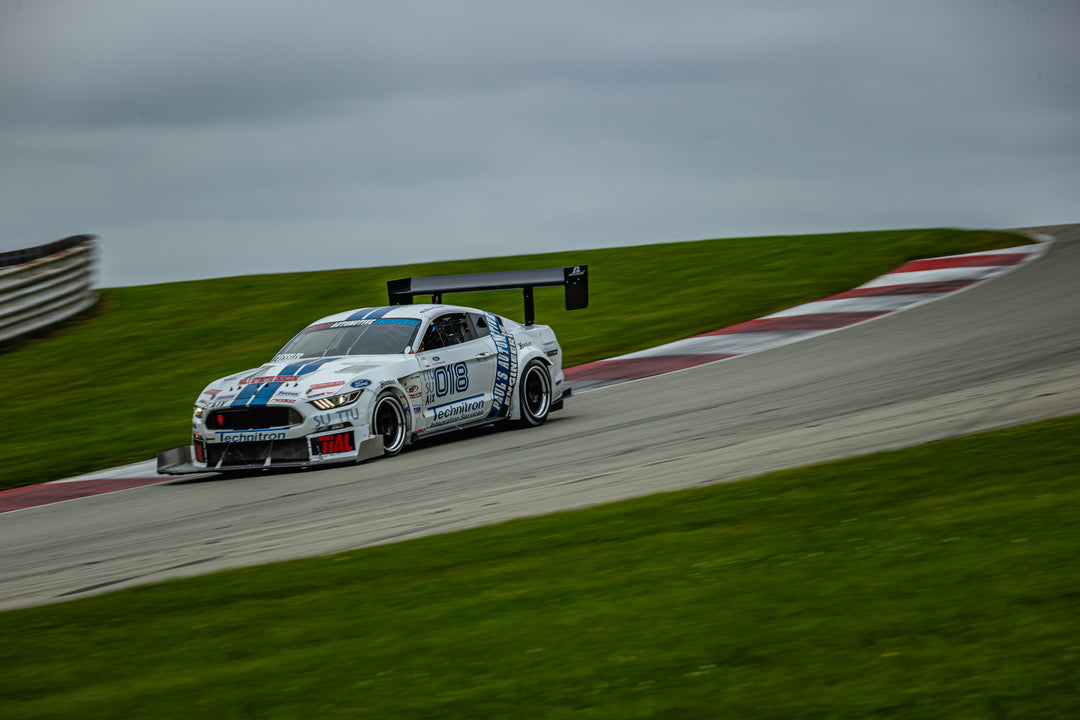
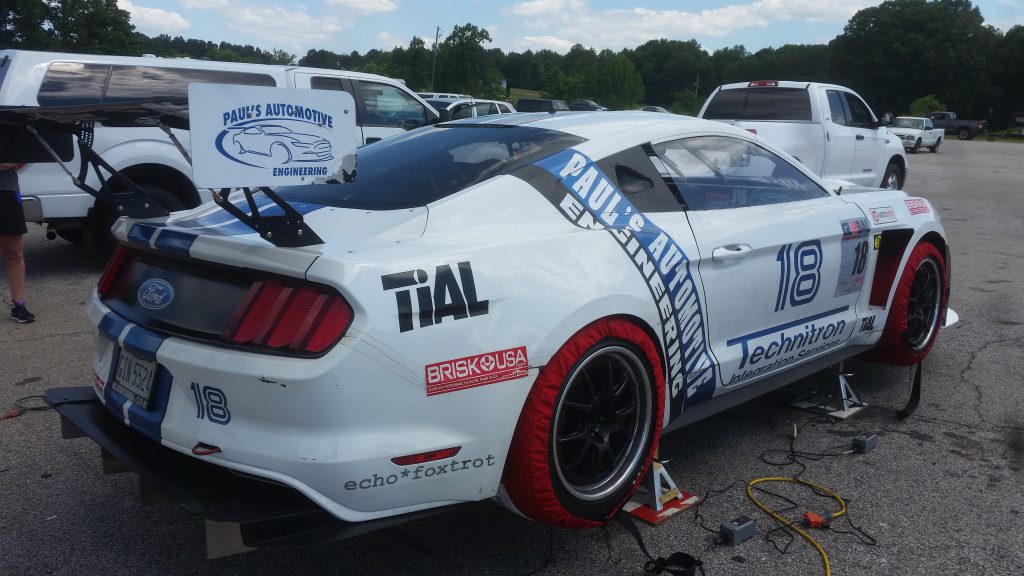
At Paul's Automotive Engineering, we have specialized in custom Mustang and Ford services since 1984 and carry over 100 years of combined experience. If you are ready to hand off the job, read what to expect from shop communication during a performance build so the process feels familiar from day one.
Frequently Asked Questions
How much does it cost to install a supercharger on an F-150?
Kit price and labor are separate line items. The Whipple Gen 6 Stage 2 F150 supercharger kit for 2021-2023 5.0L trucks lists at $9,999.99, and the 2024-2026 version lists at $10,299.99. Professional installation, custom tuning, and any supporting mods add to that total. Budget for a pre-installation inspection as well, since compression and leak-down results can change the scope of the job before a single bolt comes off.
How long does an F-150 supercharger installation take?
ProCharger lists 8-9 hours for its 2024-2026 F-150 5.0L system, and a separate ProCharger article cites 6-8 hours. Those figures assume a lift, the right tools, and no surprises. A first-time DIY install in a home garage typically stretches across a full weekend once you add coolant draining, intake removal, and post-installation checks. Add time for tuning and a test drive before the truck is ready for daily use.
Can you install a supercharger on an F-150 yourself?
Yes, if you have a lift or tall jack stands, a torque wrench, cooling system tools, and comfort working around the PCM. The kits are designed as bolt-on systems with no cutting or grinding. The harder part is calibration: the Whipple kits ship with a Tomahawk flash tool, but reading data logs and confirming knock control and fuel trims takes experience. Many owners handle the wrenches and leave the tune validation to a shop.
Does an F-150 need a custom tune after a supercharger installation?
It needs the calibration that ships with the kit at minimum, and a custom tune if you change pulley size, fuel injectors, or exhaust. The Whipple Stage 2 kits include PCM programming through the Tomahawk tool that adjusts torque management, spark timing, and transmission behavior while keeping factory drive modes like Tow and Sport. Skipping calibration or running a mismatched tune is the most common route to detonation and engine damage.
Getting a supercharger build right takes more than a good kit. It takes a shop that inspects the truck, installs the system correctly, and dials in the calibration so the whole package works together. Paul's Automotive Engineering brings decades of Ford performance experience, authorized parts, and in-house tuning to every build. Get started with Paul's Automotive Engineering and email us to schedule your appointment.


Leave a comment